


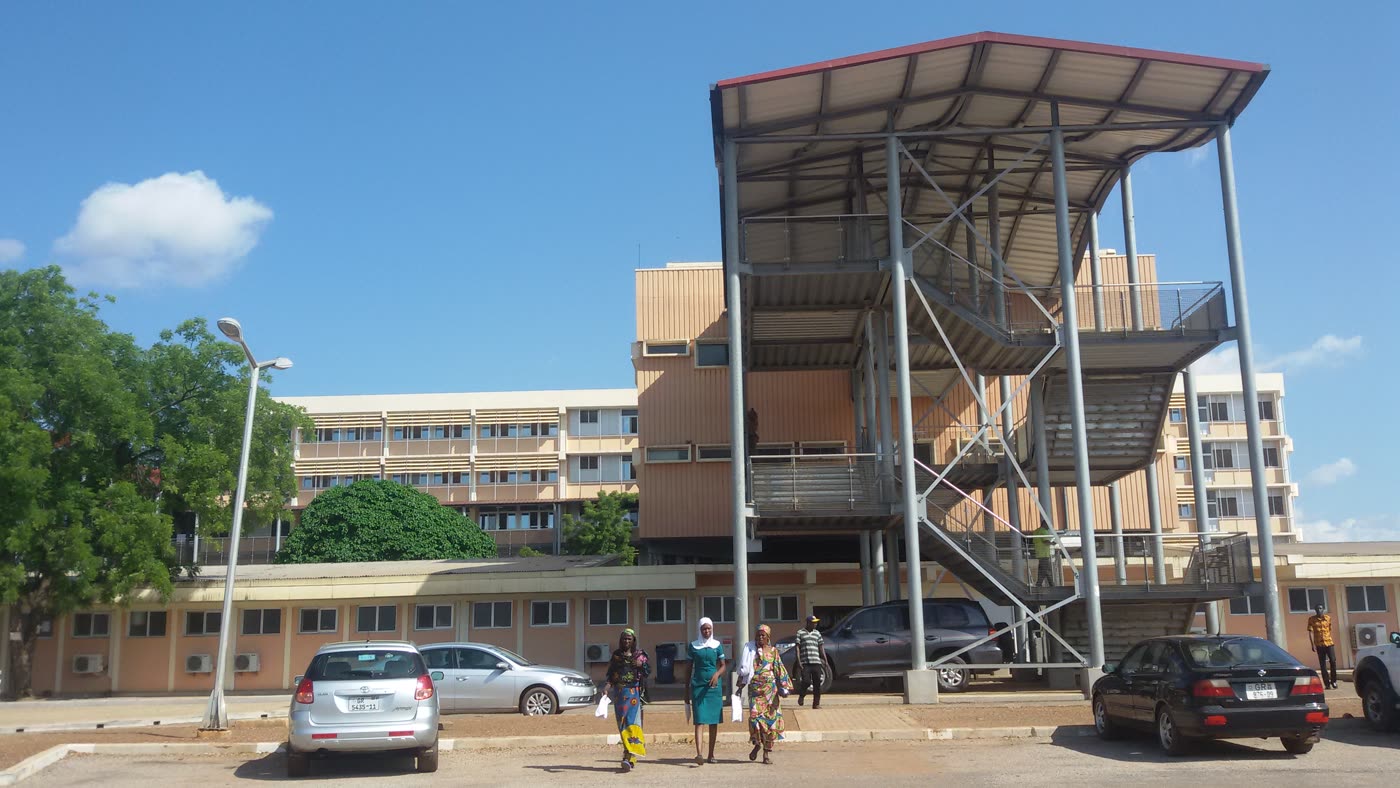
No one should die looking for a hospital bed.
In an emergency, “no bed” is rarely about beds. It's oxygen, ICU, blood, a surgeon on call. NoBed.ai is a prototype for a shared, up-to-date view of which hospitals can take a patient, so fewer journeys end at a closed door.
Demo uses sample data, not current hospital availability.
In a life-threatening emergency, call 112 first.
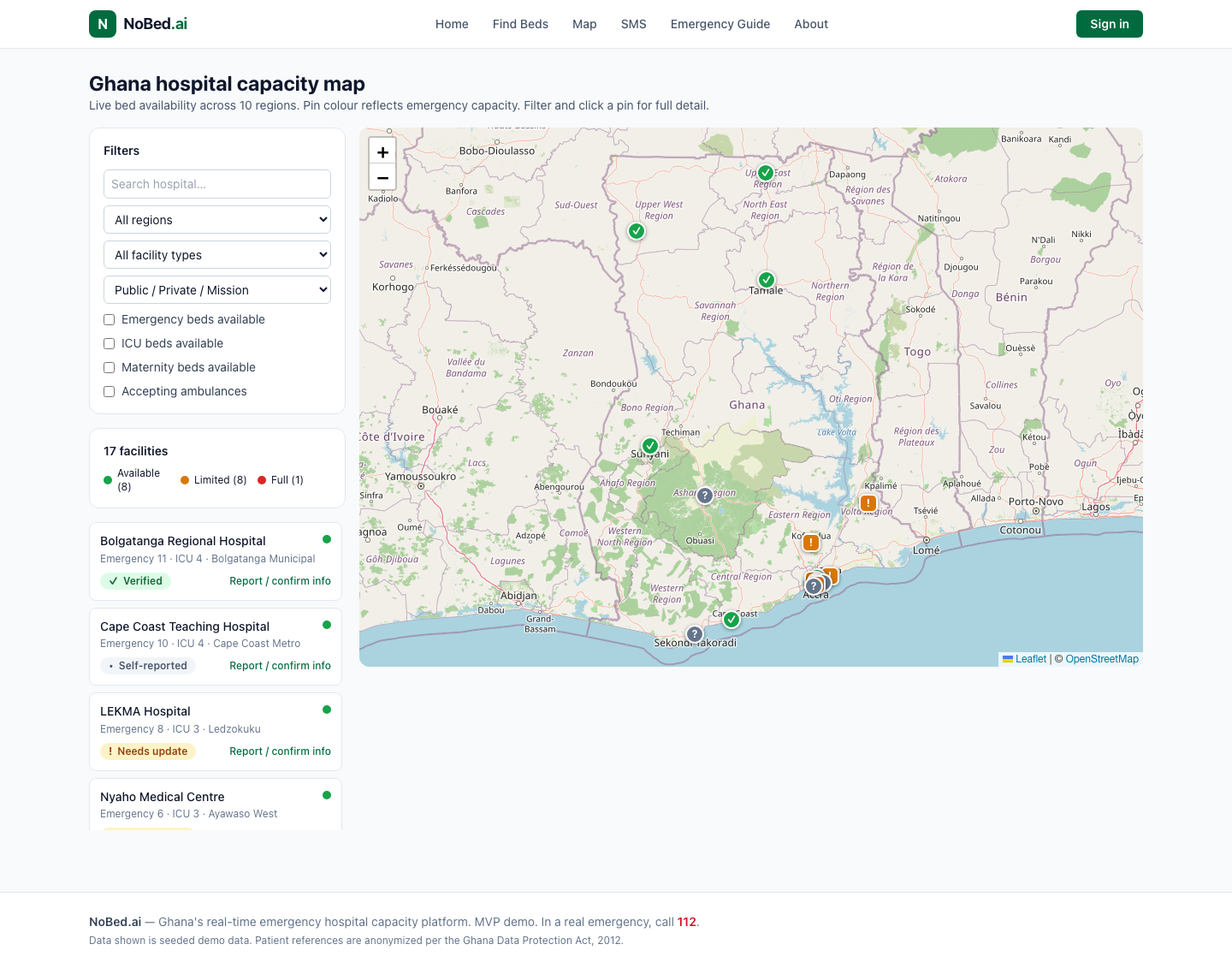
© OpenStreetMap contributors
The beds may exist. The visibility does not.
No Bed Syndrome is rarely a pure shortage. A bed only counts if the hospital can actually use it, with the oxygen, ICU, blood and staff to match. No one can see, in the moment, which facility can take the patient.
- 11:40 PMHospital A: No ICU bed
- 12:25 AMHospital B: Theatre full
- 1:10 AMHospital C: Oxygen low
- 1:55 AMStill searching…
Every hospital gate is another gamble with time no one has.
- 1See the nearest facility with a free, functional ICU bed in one search, not ten phone calls.
- 2Share the need with the receiving facility before setting off.
- 3Follow the transfer instead of losing it between hospitals.
- 4Spend the night on the patient, not on the phone.
What NoBed.ai is built to make possible.
How it's meant to work.
Steps 1–3 are in the public demo on sample data. Step 4 lives in the staff portals behind sign-in. Everything runs on sample data.
Facilities report capacity
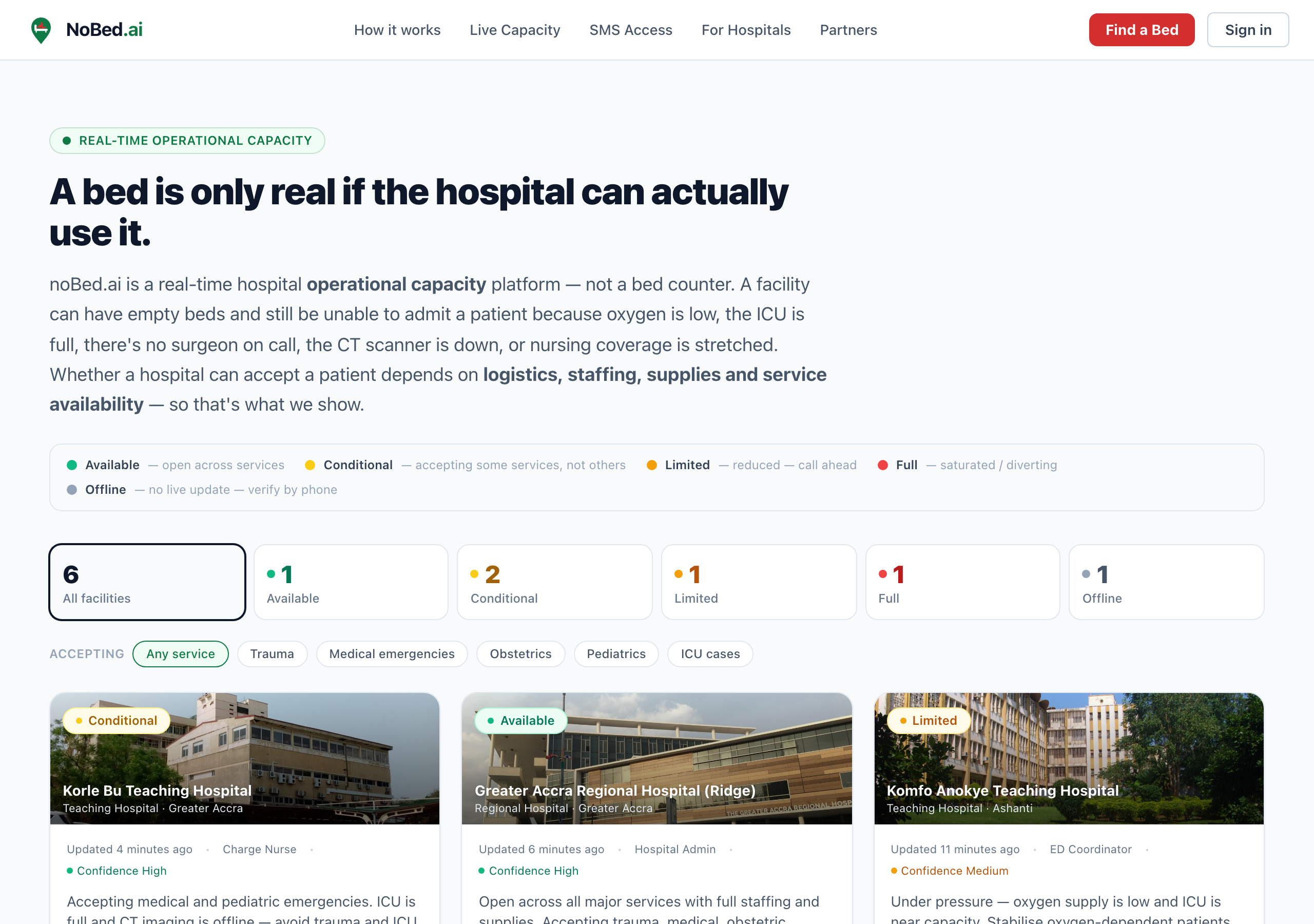
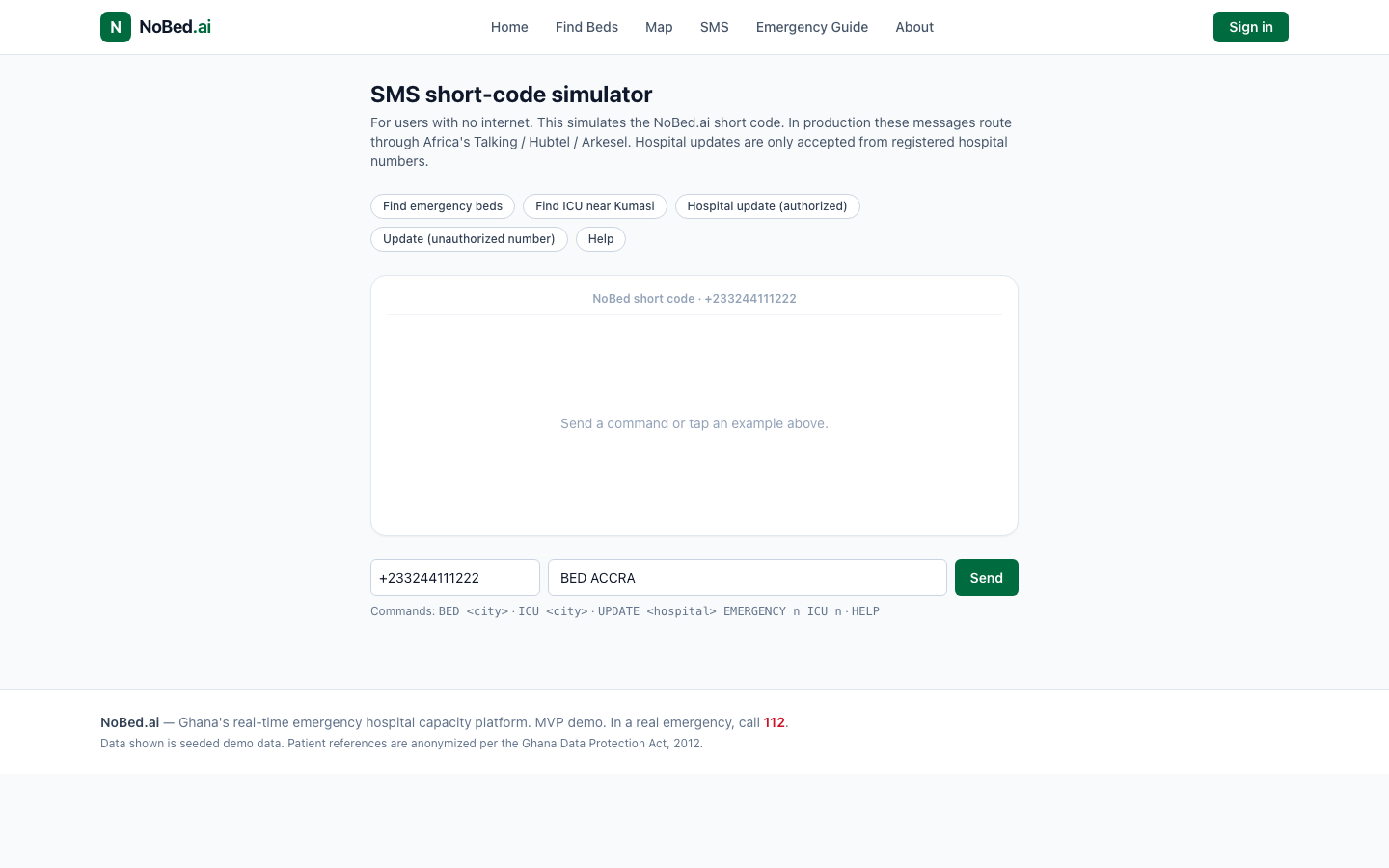
Charge nurses or admins update beds, ICU, oxygen, staffing, imaging and theatre, from a dashboard or by SMS.
Capacity is computed and dated
Reports become a functional-capacity status, and how recently each was updated is shown, so you can judge how much to trust a number.
People search by the care needed
Search by location and the care actually needed, such as trauma, ICU or obstetrics, not just an empty bed. Reported capacity is still not a promise a facility will accept a given patient.
Referrals, in the staff portals
Behind sign-in, a referral can be created, a bed reserved at the destination, and each step logged, all on sample data. Live ambulance routing is not built yet.
The software is real. The data is sample.
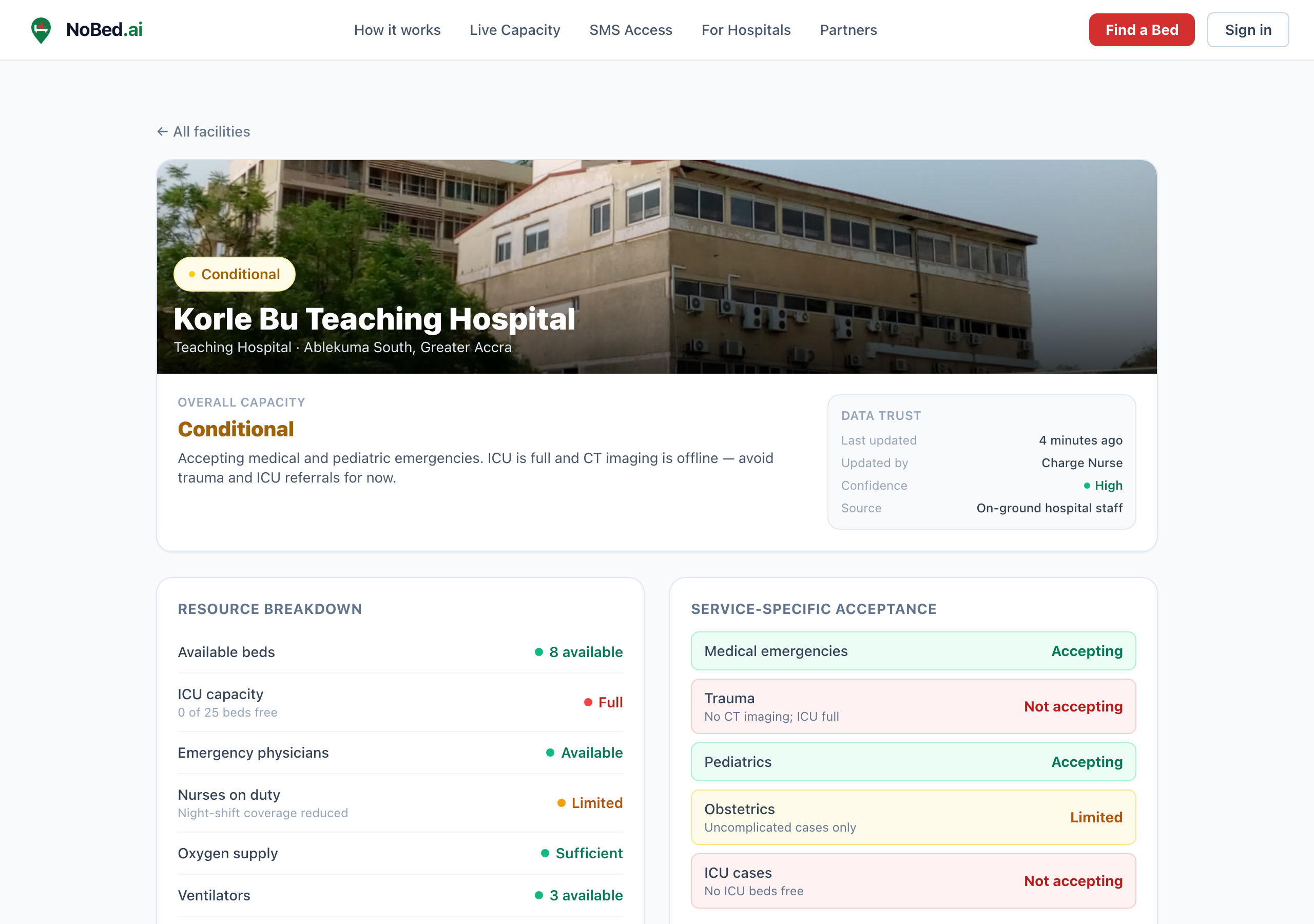
These are real screens from the prototype, running on sample data. Pick a feature to preview it, or open it in the demo.
Built to be trusted with the worst nights.
A capacity view is only useful if people can believe it. Here is how to read what you see, and the limits we are honest about.
In a life-threatening emergency, call 112 first. NoBed.ai helps you choose where to go. It is not emergency dispatch.
Understand the data
Every figure here is sample data. Each facility shows who would report it and how recently it was updated, so you can judge how much to trust a number at a glance.
Confirm before transfer
Reported capacity is not a guarantee of acceptance. A hospital can look open and still be unable to take a specific case, so always confirm with the receiving facility before moving a patient.
Protect information
Capacity updates are accepted only from a signed-in facility account, every change is written to an audit log, and referrals are keyed to a reference code the system generates, not a patient's name.
Explore the hospital capacity demo.
Sample profiles of Ghanaian hospitals show how capacity information could support referral decisions. These are not participating partners, and the figures do not show current availability.
 Sample data
Korle Bu Teaching Hospital
Teaching Hospital · Greater Accra
Care capacity
- Emergency beds
- 8 available
- ICU
- Full
Resources & staffing
- Oxygen
- Sufficient
- Nurses
- Limited
- Ventilators
- 3 available
- Doctors
- Available
Help Ghana end No Bed Syndrome.
The demo is built and shows how it would work. What it needs now is pilot hospitals, partners, and hands to turn it into a real service.
In a life-threatening emergency, call 112 first. noBed.ai helps you choose where to go. It does not replace emergency dispatch.